THE
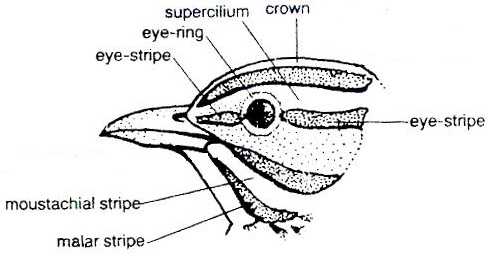
HEAD
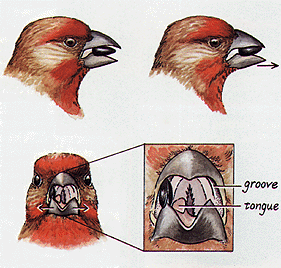
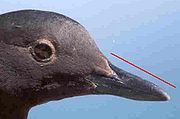
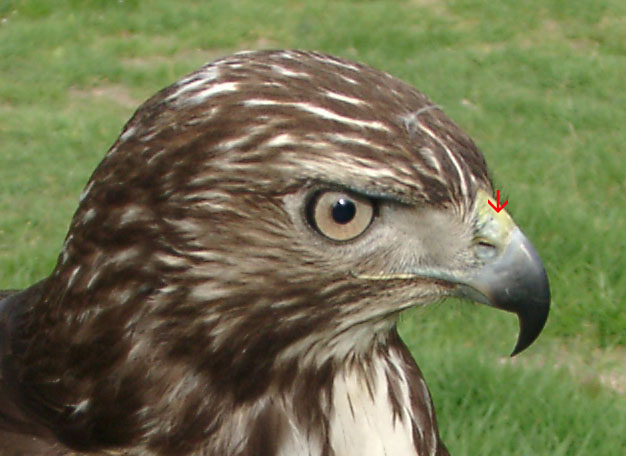
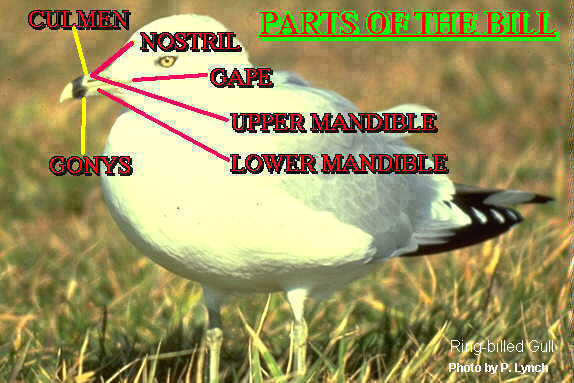
THE BILL
(see http://en.wikipedia.org/wiki/Beak for details)
|
THE TRUNK
THE
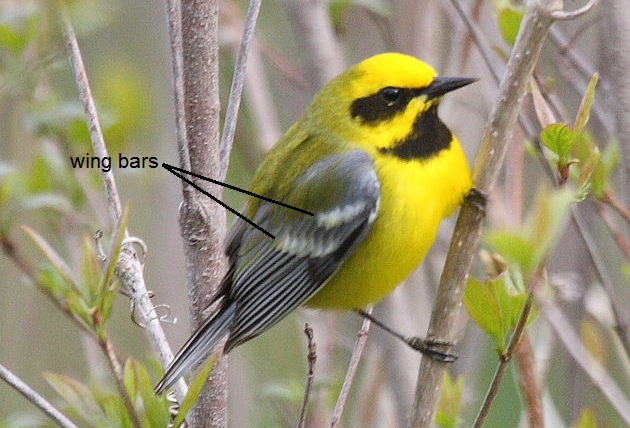
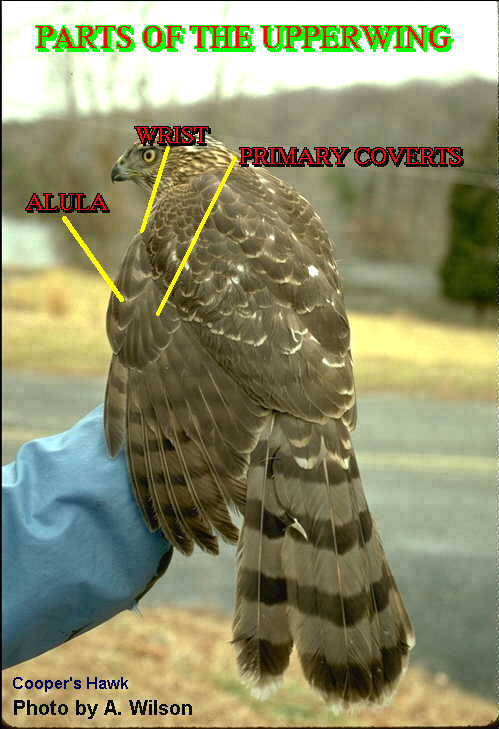
WINGS
THE
LEGS & FEET THE TAIL
|





THE
HEAD
THE BILL
(see http://en.wikipedia.org/wiki/Beak for details)
|
THE TRUNK
THE
WINGS
THE
LEGS & FEET THE TAIL
|
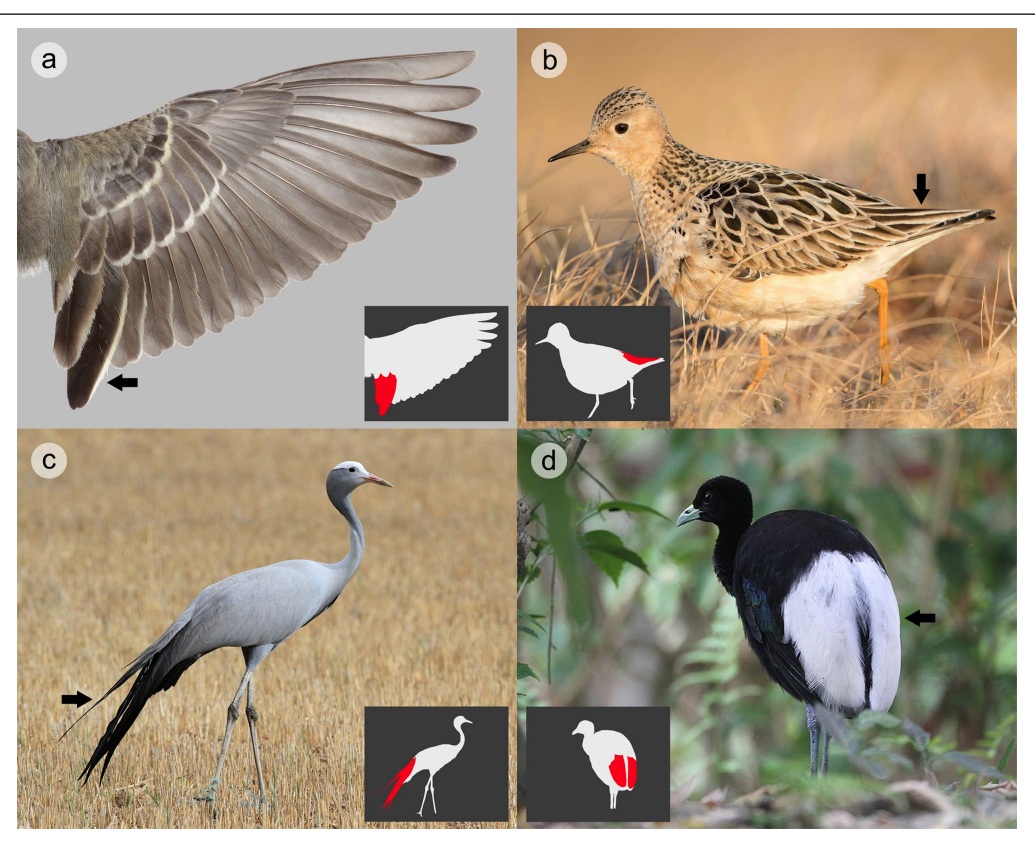
The function of tertial feathers. In many birds,
the tertial feathers (black arrows; red feathers, inset) are morphologically
distinct. These feathers
protect the remiges from abrasion
when a bird is not flying and are particularly developed in species that feed
on the ground, such as
(a) wagtails (Motacillidae; pictured, Eastern Yellow
Wagtail), and (b) many shorebirds (Charadriiformes; pictured, Buff-breasted Sandpiper). These feathers
may also help close the gap between the secondary feathers and a bird’s body, thereby improving
aerodynamic performance. Tertials may also be used
for display
and visual communication, as with some cranes (Gruiformes), such
as the elongated tertials in the (c) Blue Crane, or the prominent
white tertials contrasting
with the dark wing and body plumage in the (d) Pale-winged Trumpeter (From: O'Connor et al. 2025).

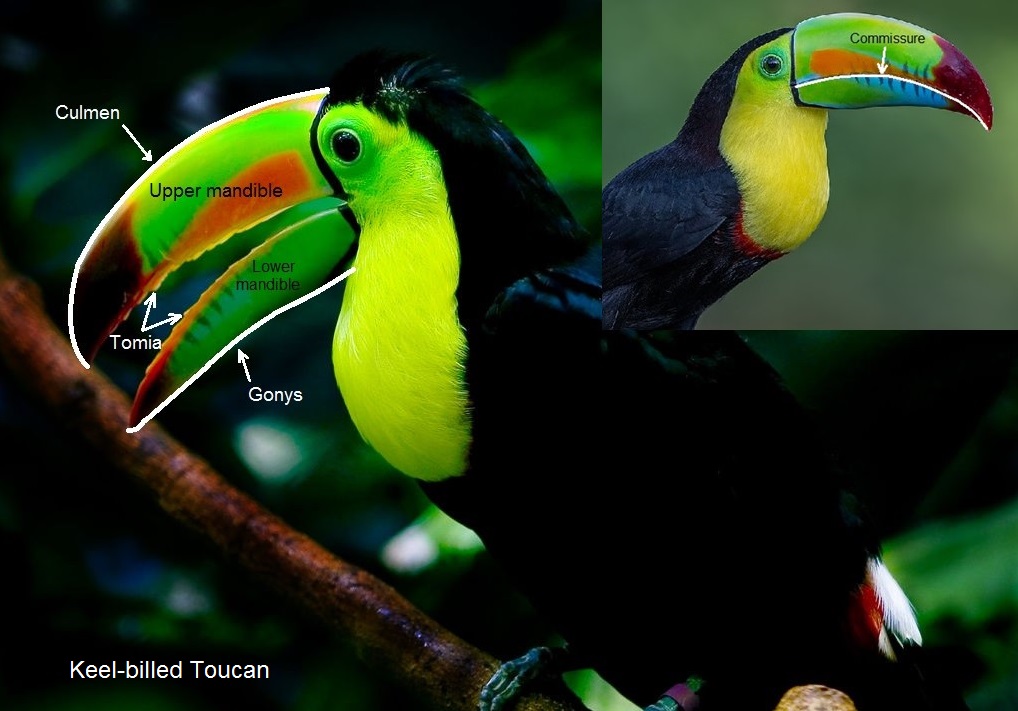
https://commons.wikimedia.org/wiki/File:Keel-billed_toucan_woodland.jpg &
https://en.wikipedia.org/wiki/Keel-billed_toucan#/media/File:Keel-billed_Toucan_(16201157519).jpg
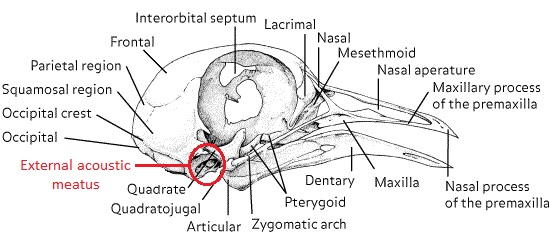
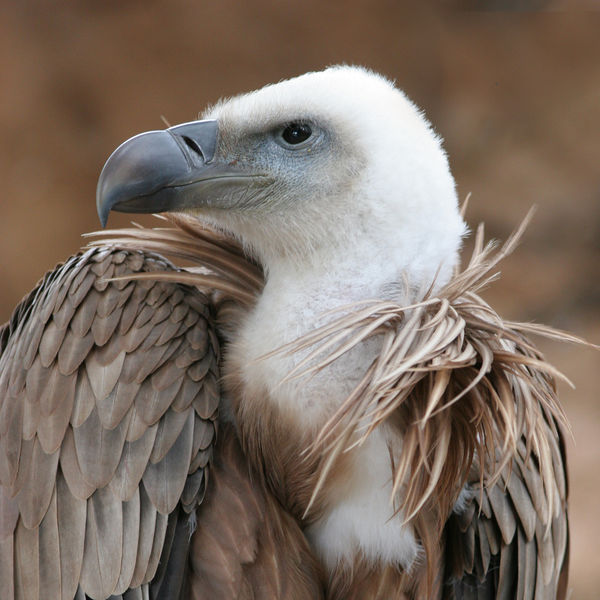
Photo source: http://en.wikipedia.org/wiki/Image:Eagle_beak_sideview_A.jpg

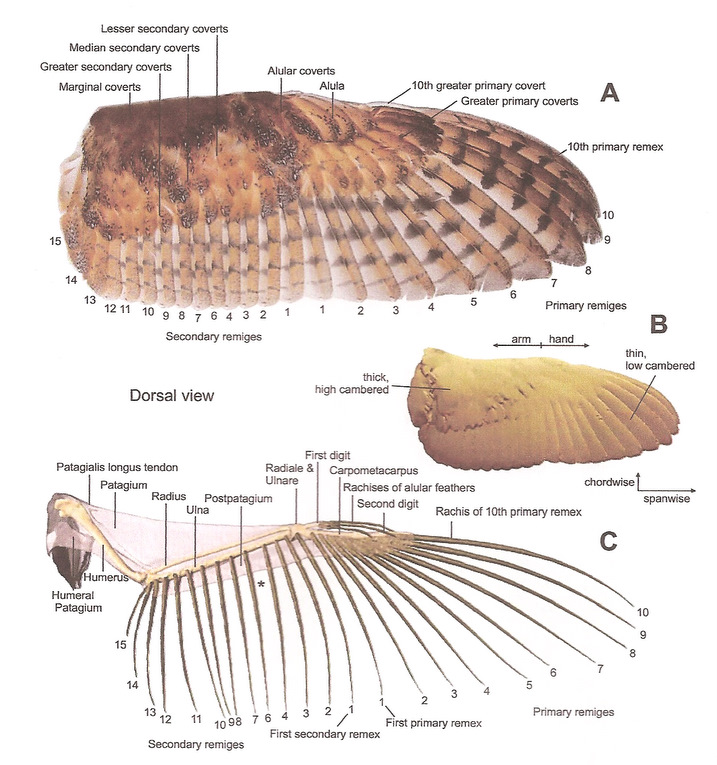
Barn Owl wing. *The fifth secondary remex is missing, leaving a gap called the diastema (C). Source: Bachmann (2010).
Nictitating membrane
Literature cited:
Bachmann, T. W. 2010. Anatomical, morphometrical and biomechanical studies of Barn Owls' and pigeons' wings. Ph. D. dissertation, RWTH Aachen University, Aachen, Germany.
O'Connor et al. 2025. Chicago Archaeopteryx informs on the early evolution of the avian bauplan. Nature 641: 1201–1207.
Useful links:
